
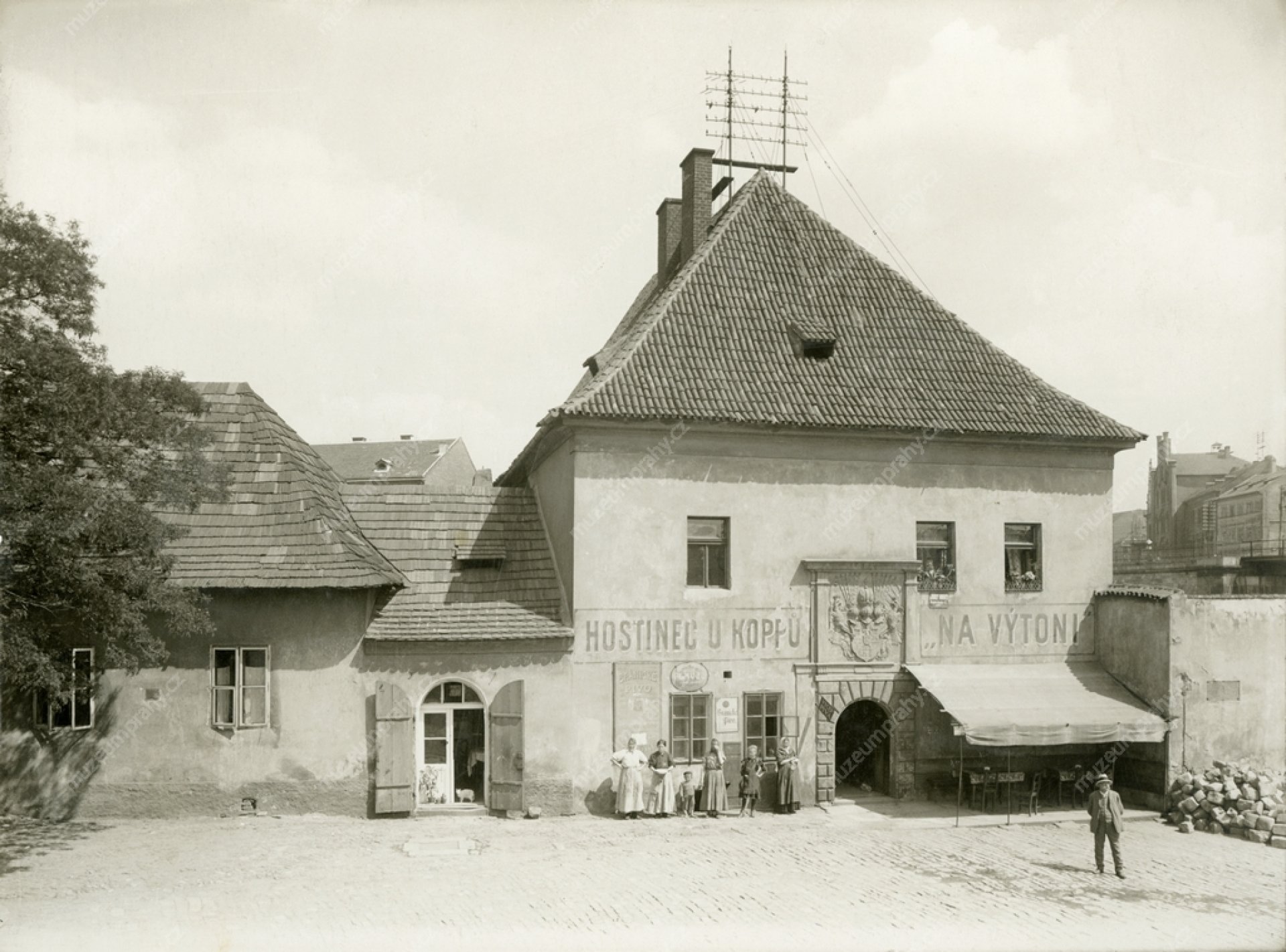
The Podskalí Customs House at Výtoň
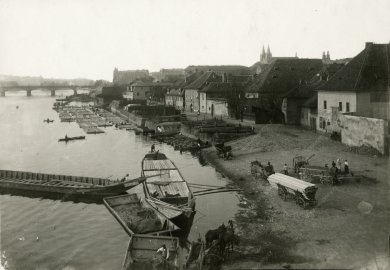
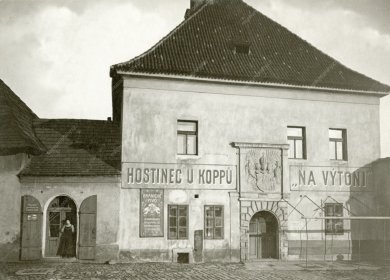
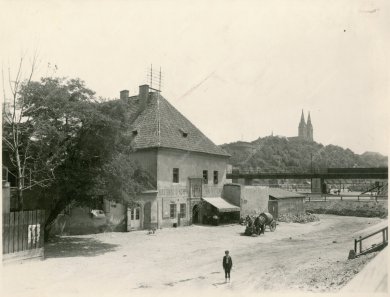
The building around which everything else has disappeared
Timber was a very important building material in the Middle Ages. And the timber trade was a welcome source of income. At first only for the monarch, and later also for Prague's New Town. That is why the first "administrative" building for collecting customs duties was probably built here as early as around 1500. Initially, the customs house looked like a fenced area for storing wood with a simple building for the collectors' office—the foundation of today's building. In the 16th century, the building was then renovated in the Renaissance style.
"The area is called Výtoň because, before customs duties were paid in cash, a portion of the timber was "cut out" (vytínat in Czech) from the load at a place known as výtoniště. Every twelfth log served as the "customs duty"."
In the centuries that followed, Výtoň's importance grew. Customs duties remained a significant source of revenue and the collection process became more systematic and organized. In the early 18th century, the building was modernized, and the surrounding area served not only as a transhipment point, warehouse, and timber market, but also as a hub for crafts connected in one way or another to the Vltava River.
"Even back then, cargo records were kept. In other words, something we would call delivery notes and customs declarations today."
In the 19th century, rafting gradually gave way to more modern forms of transport. Steam power became popular, both on rivers and railways, and the importance of the customs house began to decline. Moreover, in the second half of the 19th century, the city underwent rapid modernization, and as part of urban renewal, Podskalí was almost entirely demolished. New streets were built, modern buildings constructed, and the riverfront redesigned. The original rafters' quarter disappeared completely, and with it, a significant part of Prague's history.
Although not entirely. The Podskalí customs house did not stand in the way of the redevelopment. Moreover, it was a well-preserved historic brick building that was already regarded at the time as an important reminder of Podskalí's rafting past.
After 1945, the building was seized by the state, after which it gradually started to deteriorate. This continued until the late 1980s, when the dilapidated building was saved by a renovation. The building was then opened to the public, and a permanent exhibition dedicated to rafting and the Podskalí area was opened. Today, the Podskalí Customs House in Výtoň is managed by the Museum of Prague.